
A Long Simmer: The Story of Texas Chili History
Before it was trendy,
Before it was debated,
Before someone put it on spaghetti,
It was cooking in Texas.
Chili, real Texas chili, wasn’t invented in a test kitchen. It wasn’t a marketing idea. It was survival food. Borderland food. Cattle-camp food.
In the mid-1800s, on cattle drives and in frontier towns, cooks needed something affordable, filling, and bold enough to satisfy men who worked long days in hard country. Dried beef, suet, salt, crushed dried chilies, and maybe cumin if someone in your camp was smart enough to plant some herbs out of the way of the cattle on a previous drive. All simmered low over open flame. It wasn’t fancy…it was fuel.
And then there were the Chili Queens. In late 19th-century San Antonio, women set up open-air stands in the plazas at night, cooking pots of chili over live fire. Cowboys, soldiers, travelers, they all lined up. The bowls were simple, and the flavor wasn’t. Those women set the standard for the balance that we all try to emulate with the perfect blend of Ancho, Pasilla, Guajillo, and Arbol peppers, - and they made chili famous. Not in restaurants, not in dining rooms, but under the Texas sky.
By the early 1900s, chili had moved beyond the plaza. Chili parlors opened, chili powder was commercialized in San Antonio so home cooks could recreate the flavor without grinding dried peppers by hand. What started as campfire sustenance became cultural identity. And Texans took it seriously.
In 1967, in a dusty ghost town called Terlingua, a writer and a local chili champion staged what would become the first major modern chili cook-off. It wasn’t polite and certainly wasn’t quiet. It was competitive, proud, and a little bit legendary.
In 1977, Texas declared chili the official state dish. Huh? Not barbecue? Not steak? Nope - Chili.
Why?
Because chili is Texas in a bowl. It’s resourceful, it’s bold without apology, it’s not about frills — it’s about depth.
Traditional Texas Red contains no beans and no tomatoes. The debate about whether to include them is older than most of us. As chili traveled across the country, beans joined the party. But at its core, Texas chili is about meat, chilies, time, and balance. Real chili builds. It rolls out in layers. Smoke, spice, richness, and a little edge. It warms you twice — first when you hold the bowl, and again as it’s going down.
And that’s where we find ourselves today, with snow forecast again this weekend in New England and the North Atlantic wind doing its thing. But fear not, Llano and Rye is steady at the pit.
Chili isn’t just “a special” this weekend: it’s winter logic. It’s cattle-camp tradition meeting New England weather, and borderland grit in a seaside town. It’s the taste of time well spent.
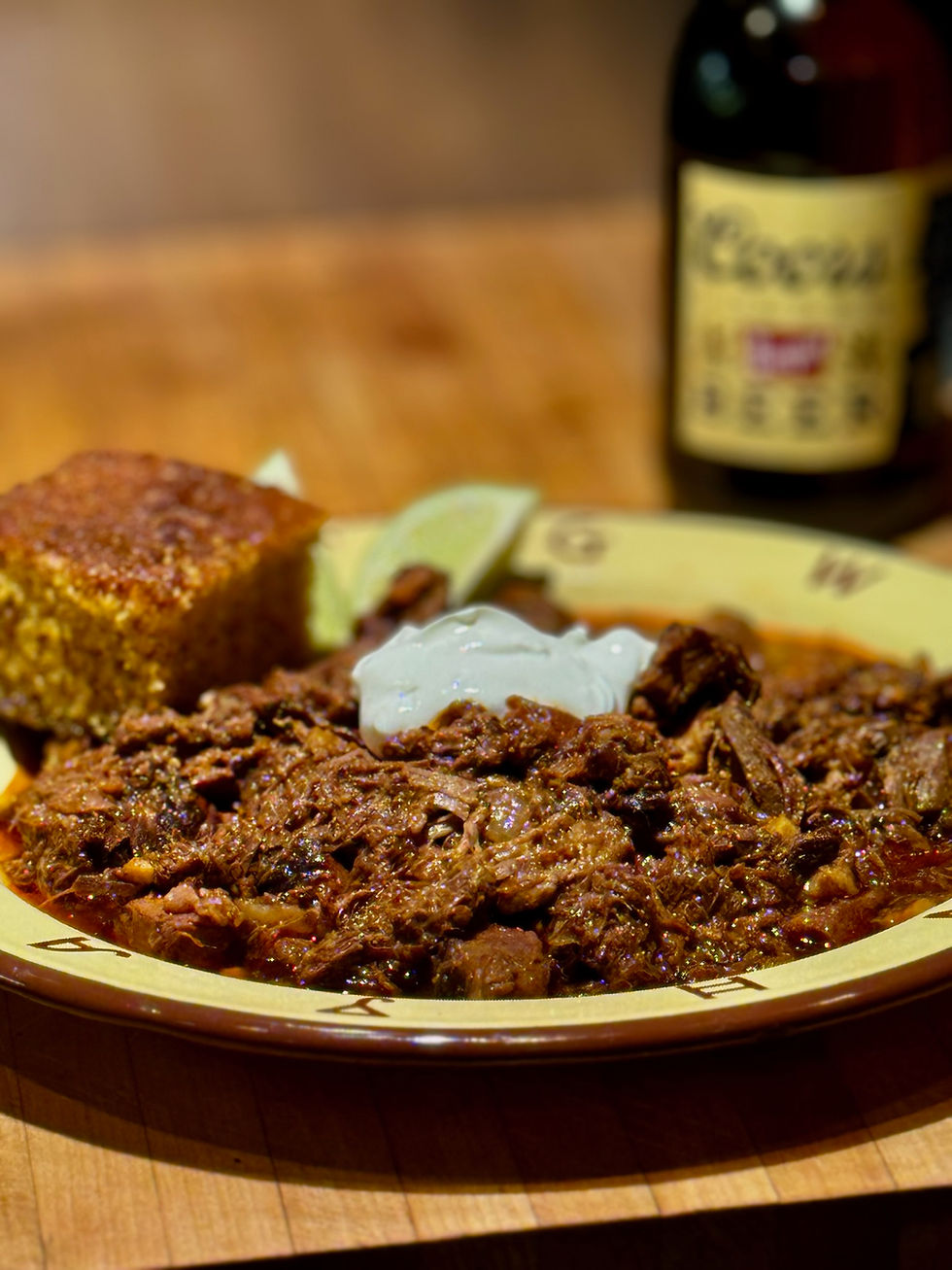
We toast our own signature blend of peppers, then add Llano and Rye’s incomparable brisket. We let it all go low, and we let it deepen. We let it become what it’s supposed to be, just like it was in the beginning.
And when it’s cold like this, you swing by Llano & Rye, pick up a quart, get a bowl, a spoon, a hunk of maple brown butter cornbread, and settle in for a cozy Saturday night.


Comments